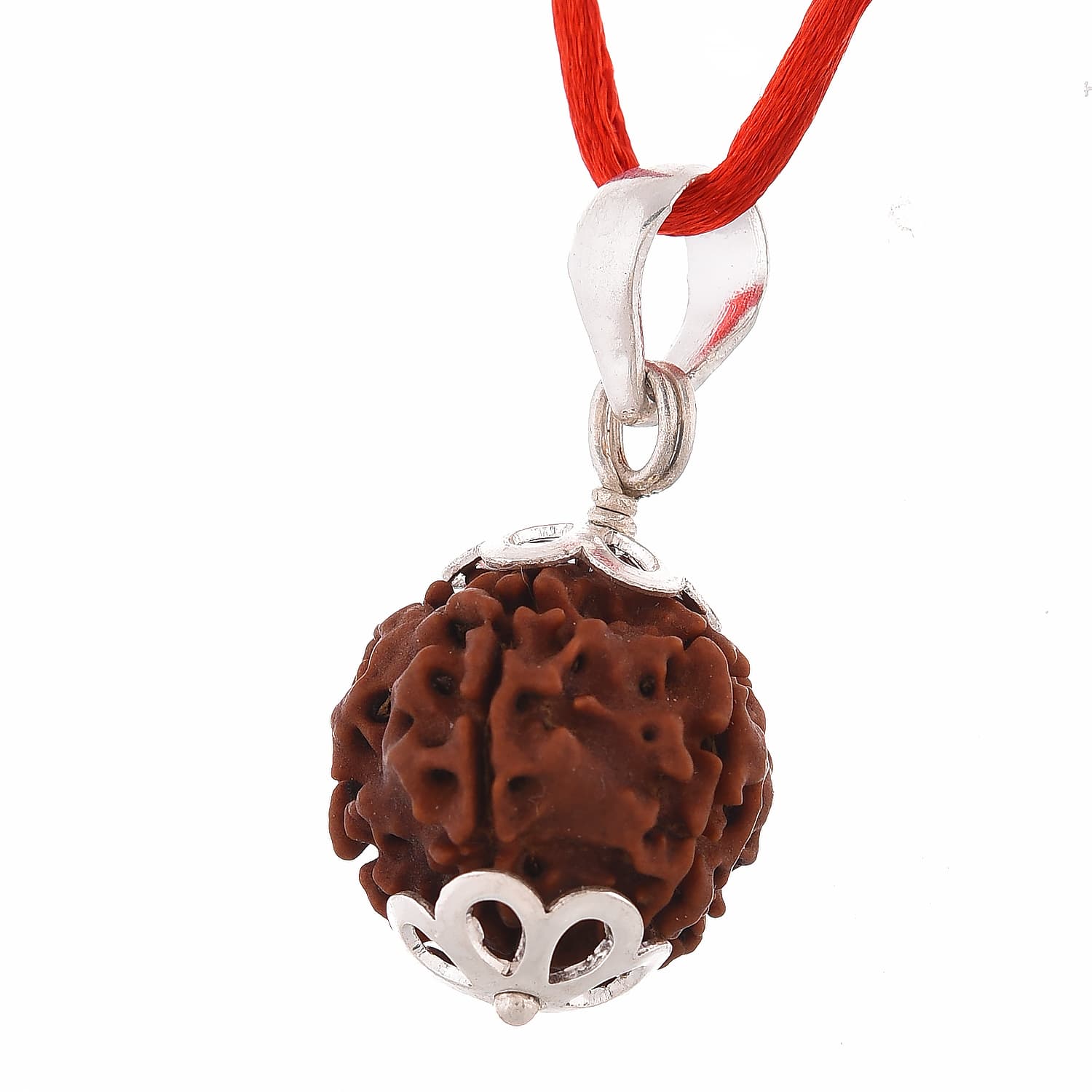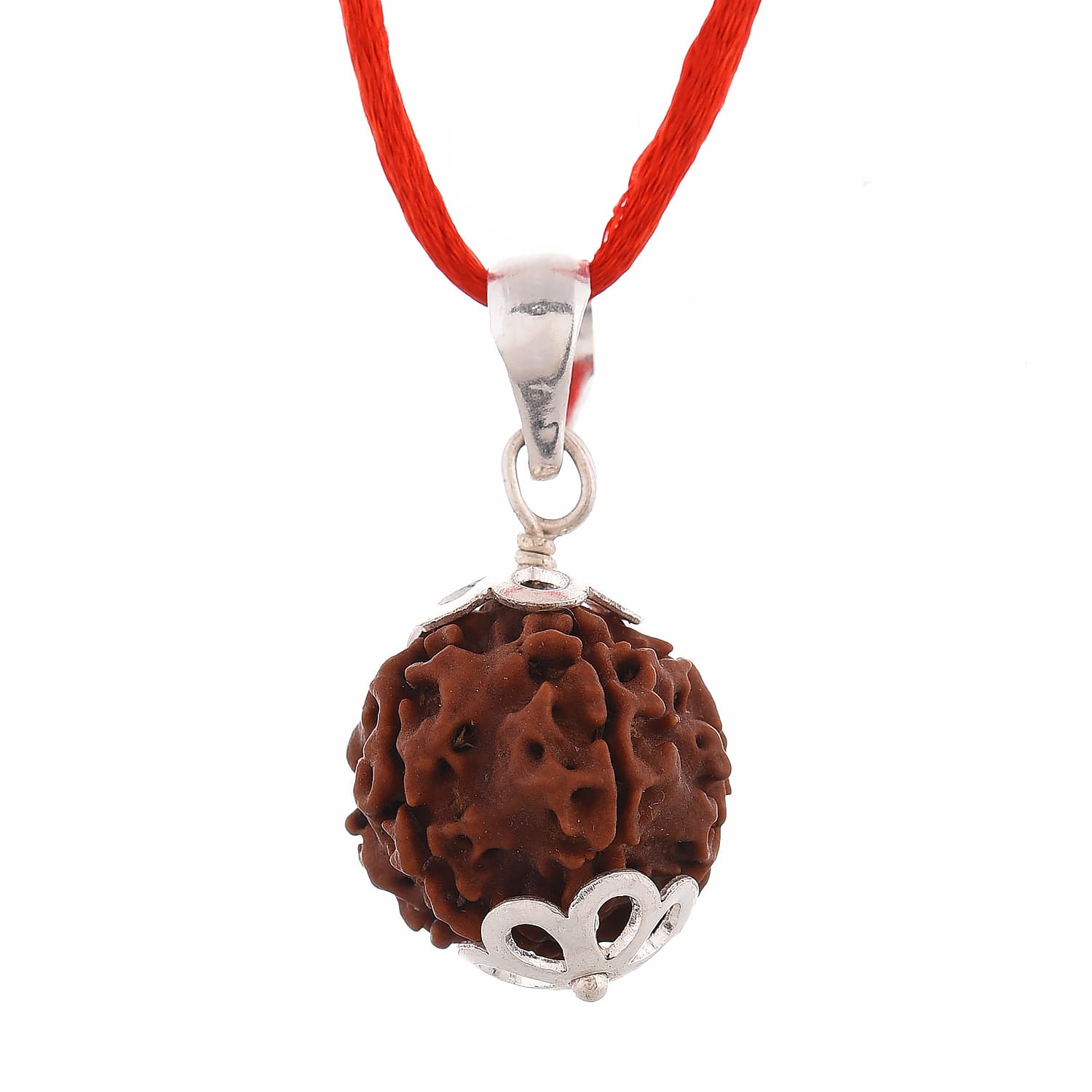
Mukhi guides
4 Mukhi Rudraksha: The Bead of Brahma and the Spoken Word
Governed by Lord Brahma and the planet Mercury, the 4 mukhi rudraksha carries centuries of tradition around learning, eloquence, and the creative mind. Here is what the texts and pandits tell us about this quietly remarkable bead.
Amorfos · 5 min read
Among the many faces of rudraksha, the 4 mukhi holds a particular elegance — not the loudest bead in the mala, yet one that has been quietly recommended by astrologers and pandits for generations to those whose work lives in the realm of thought, language, and learning. To understand it fully, we begin where all rudraksha study begins: with its ruling deity and its ruling planet.
Ruling Deity: Lord Brahma
The 4 mukhi rudraksha is traditionally held to be a form of Lord Brahma, the first of the Hindu Trimurti and the deity of creation. The four faces of the bead are understood to mirror Brahma's four heads — Chaturmukha — each turned toward a cardinal direction, each said to have brought forth the four Vedas. This cosmological symbolism makes the 4 mukhi deeply connected to knowledge in its most foundational sense: not merely information, but the living wisdom enshrined in sacred text and oral tradition.
Brahma's association with creation extends beyond the physical world to the creation of thought, form, and word. Wearing a bead in his name has, for centuries, been a gesture of devotion to the generative power of the mind — an acknowledgement that learning and expression are themselves sacred acts.
Ruling Planet: Mercury (Budha)
In Jyotish — Vedic astrology — the 4 mukhi rudraksha is governed by Mercury, known as Budha. Mercury is the graha of intellect, communication, commerce, and analytical thought. It rules the signs Gemini and Virgo and is considered the planet most directly linked to how we process, articulate, and share ideas.
When Mercury is considered weak or afflicted in a birth chart, astrologers have traditionally recommended the 4 mukhi rudraksha as one of several corrective or supportive measures. The bead is worn not as a remedy in any medical sense, but as a devotional and energetic alignment — a way of drawing one's daily consciousness closer to Mercurial qualities of clarity, precision, and eloquence.
Traditional Associations: Learning, Expression, and the Creative Mind
The confluence of Brahma and Mercury gives the 4 mukhi rudraksha its most enduring traditional identity: a bead for those whose lives are shaped by words and ideas. Across classical texts and living pandit traditions, it is consistently associated with the following qualities:
- Depth and retention in study — students, scholars, and researchers have long worn this bead on the recommendation of family pandits
- Eloquence in speech — teachers, orators, writers, and those in public-facing roles are frequently guided toward it
- Sharpness of analytical thought — particularly valued by those in fields that require rigorous logic and clear communication
- Creative expression — the act of bringing something new into the world through craft, writing, or design sits comfortably within Brahma's domain
- Memory and concentration — qualities that classical texts link to a well-functioning Mercury
It is important to note that these are traditional associations passed down through generations of Jyotish practice and temple scholarship. Amorfos makes no medical or therapeutic claims for any rudraksha bead. The 4 mukhi, like all beads in our collection, is offered as a devotional object with a rich and documented cultural history.
Who Wears the 4 Mukhi Rudraksha?
On the recommendation of astrologers and pandits, the 4 mukhi rudraksha is traditionally worn by a wide range of people — united not by profession but by their relationship to the life of the mind. Students preparing for significant examinations, professors and lecturers, journalists and editors, lawyers who must argue with precision, musicians who compose and notate, and spiritual seekers engaged in the study of sacred texts have all, across traditions and generations, been guided to this bead.
In many households across India, a young person beginning higher education is given a 4 mukhi mala or pendant as a blessing — a gesture that connects the practical desire for academic success with the older, more grounded tradition of placing one's learning under the protection of Brahma and the grace of Budha.
Origin and Sourcing
The finest 4 mukhi rudraksha beads come primarily from Nepal and Indonesia. Nepali beads — grown at altitude in the Himalayan foothills — tend to be larger, with deep, clearly defined mukhis and a dense, weighty feel in the hand. Indonesian beads, sourced largely from Java, are smaller and smoother, often preferred for delicate pendants and bracelets. Both origins carry equal traditional validity; the choice between them is largely one of aesthetic preference and intended form.
Every 4 mukhi rudraksha at Amorfos is Lab Certified — individually tested to confirm the authenticity of its mukhi count and the integrity of the bead. We believe that confidence in what you are wearing is the first step to wearing it with intention.
Wearing and Care
Pandits traditionally recommend wearing the 4 mukhi on a Monday or Wednesday, after a bath and a moment of prayer or intention-setting. The bead may be strung in red or white thread, or set in silver or copper — both metals considered compatible with Mercury's energy in classical Jyotish. Avoid prolonged exposure to chemical soaps, perfumes, or saltwater, and wipe the bead gently with a soft, dry cloth to maintain its natural lustre.
A rudraksha bead is not merely an ornament. It is a conversation between the wearer and a tradition that stretches back to the Shiva Purana — worn with awareness, it becomes an anchor for daily intention.
Whether you are drawn to the 4 mukhi rudraksha for its Jyotish significance, its Brahma devotion, or simply for the quiet beauty of a well-formed, Lab Certified bead, Amorfos is here to help you find the right piece — and to wear it with the knowledge it deserves.
Good to know
- Which deity and planet govern the 4 mukhi rudraksha?
- The 4 mukhi rudraksha is traditionally governed by Lord Brahma, the deity of creation, and by Mercury (Budha) in Vedic astrology. Its four faces are held to represent Brahma's four heads, each associated with one of the four Vedas.
- Who is typically recommended to wear a 4 mukhi rudraksha?
- On the recommendation of astrologers and pandits, the 4 mukhi is traditionally worn by students, teachers, writers, communicators, and others whose lives centre on learning and expression — particularly those for whom Mercury is considered weak or in need of balance in the birth chart.
- Are Amorfos 4 mukhi rudraksha beads certified as authentic?
- Yes. Every 4 mukhi rudraksha at Amorfos is Lab Certified, individually tested to verify the authenticity of the bead and the accuracy of its mukhi count. We offer 7-day returns on unused, sealed products and free shipping on orders above ₹999.
Rudraksha is traditionally worn on the recommendation of astrologers and pandits. We make no medical or miraculous claims. Every Amorfos bead is Lab Certified for authenticity and origin.