Mukhi guides
5 Mukhi Rudraksha: The Bead of Kalagni Rudra
Among all rudraksha beads, the five-faced is the most universally worn — a quiet constant in daily practice, carried across generations with a simplicity that belies its depth.
Amorfos · 5 min read
Walk into any home where rudraksha is worn with intention, and the bead you are most likely to find is the five-faced one. The 5 mukhi rudraksha is not rare or esoteric. It is, in the truest sense, the everyday bead — worn by men, women, and children across India, strung into malas, set into pendants, and carried close to the body as a matter of quiet devotion. Its very accessibility is part of its meaning.
What Does 'Mukhi' Mean?
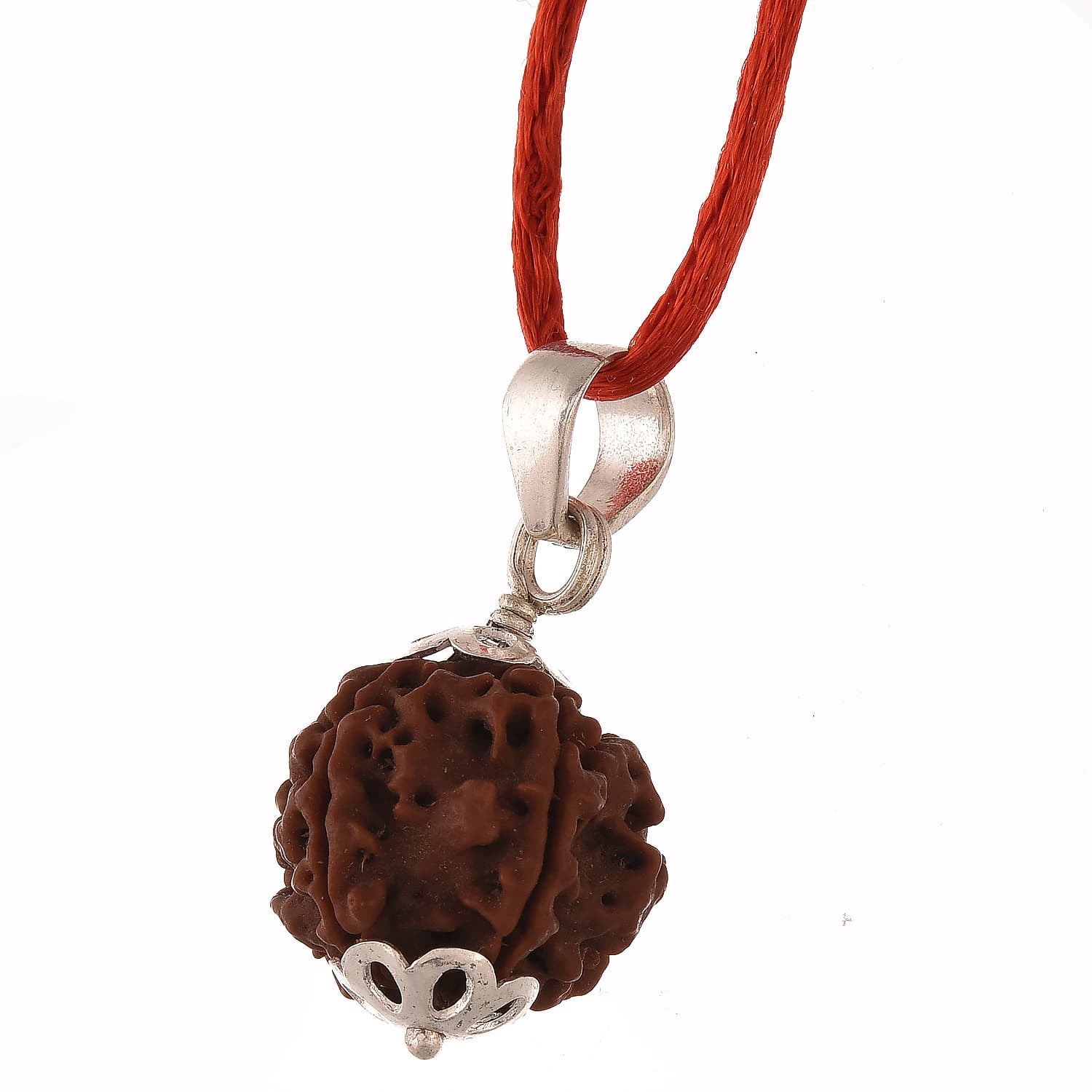
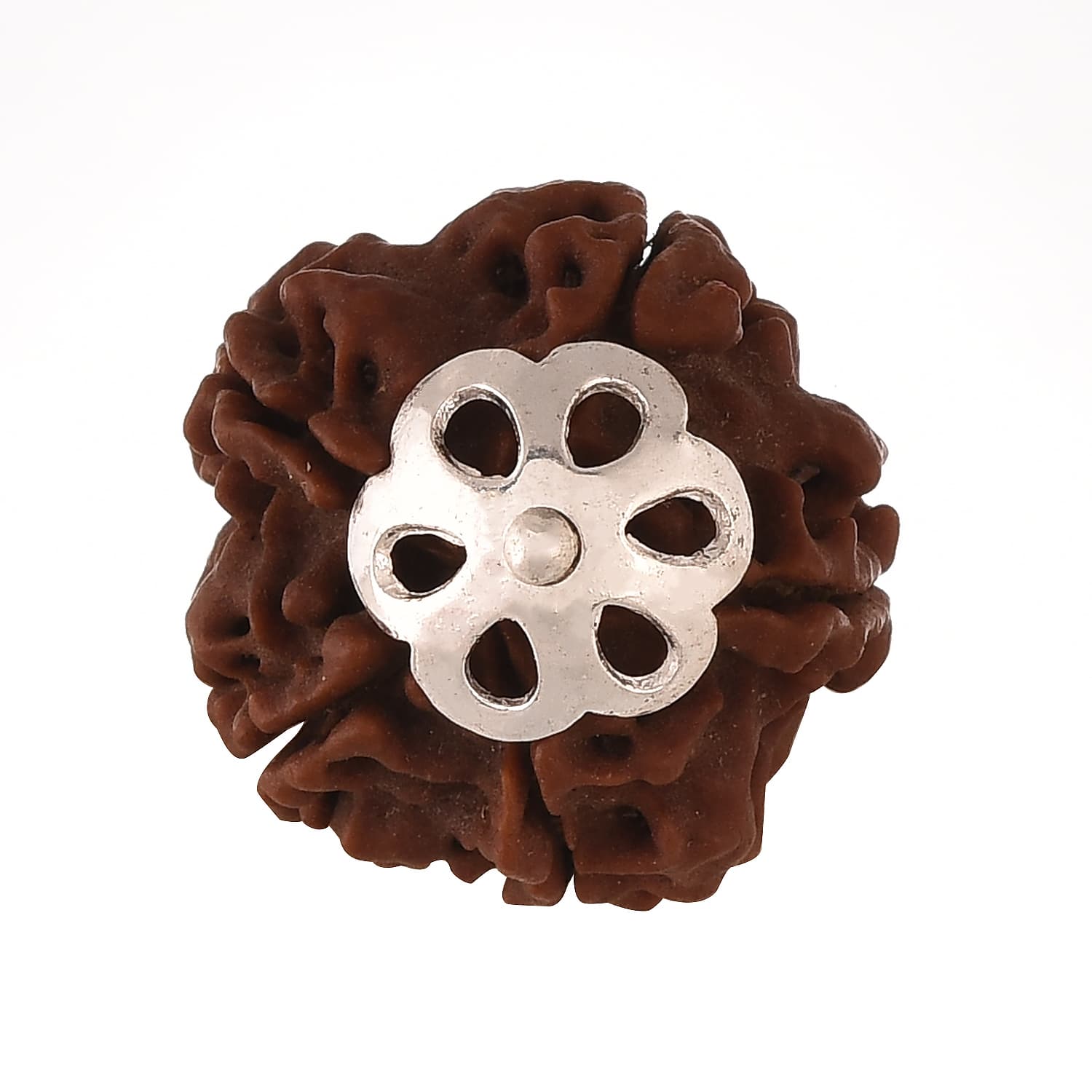
The word mukhi comes from the Sanskrit mukha, meaning face or mouth. On a rudraksha bead, the mukhis are the natural clefts or lines — called ridges — that run from the top of the bead to its base, dividing its surface into distinct segments. A 5 mukhi rudraksha has five such natural lines, forming five faces on a single seed. These lines emerge as the fruit ripens on the Elaeocarpus ganitrus tree and are in no way artificially created. The number of mukhis is the primary means by which rudraksha beads are identified and assigned their traditional significance.
Ruling Deity: Kalagni Rudra
Classical texts including the Shiva Purana and the Srimad Devi Bhagavatam consistently name Kalagni Rudra as the presiding deity of the 5 mukhi rudraksha. Kalagni Rudra is one of the eleven Rudras — a fierce, purifying form of Shiva associated with fire, time, and the dissolution of what no longer serves. The name itself carries this: Kala refers to time and also to the god of death, while Agni is fire. Together, Kalagni Rudra is the aspect of Shiva who burns away accumulated karma through the purifying force of sacred time.
This association gives the five-faced bead its particular character within the tradition. It is considered appropriate for daily, sustained wear — not just for ritual occasions — because its deity is understood as ever-present and accessible, rather than invoked only in moments of crisis or ceremony.
Ruling Planet: Jupiter (Brihaspati)
In Jyotish, the ancient science of Vedic astrology, each rudraksha mukhi is associated with a graha, or planetary influence. The 5 mukhi rudraksha is governed by Brihaspati — Jupiter, the great teacher of the gods and the planet associated in the tradition with wisdom, discernment, dharma, knowledge, and one's relationship with higher learning. Jupiter is considered the most benevolent of the grahas, and its influence is sought in matters of study, spiritual growth, and righteous conduct.
The five-faced bead is among the most recommended in classical astrology precisely because Jupiter's qualities — clarity, wisdom, balance — are considered universally beneficial, regardless of one's birth chart.
Astrologers and pandits have, across generations, recommended the 5 mukhi rudraksha to wearers seeking to strengthen Brihaspati's influence in their chart, or simply to invite the qualities of Jupiter into daily life. Because Jupiter is considered a naturally benefic planet, this bead carries none of the cautions that some mukhis with more complex planetary associations require.
Why the 5 Mukhi Is the Most Common Everyday Bead
The 5 mukhi rudraksha forms the backbone of most traditional malas. A standard 108-bead mala is composed almost entirely of five-faced beads, precisely because this mukhi is considered universally auspicious and suitable for continuous wear. Unlike higher mukhis — which are rarer, more expensive, and often recommended for specific purposes or planetary conditions — the five-faced bead requires no particular astrological precondition. It is worn by students and elders, householders and renunciants, with equal ease.
- It is the most abundant mukhi produced by the Elaeocarpus ganitrus tree, making it consistently available in both Nepal and Indian varieties.
- Its ruling planet, Jupiter, is a natural benefic — traditionally considered helpful rather than challenging for the wearer.
- Classical texts do not restrict its use to a particular gender, varna, or stage of life.
- It forms the standard bead for japa malas used in Shaivite, Shakta, and broader Hindu devotional practice.
- Astrologers and pandits frequently recommend it as a foundational bead before adding higher mukhis to one's practice.
Who Traditionally Wears the 5 Mukhi Rudraksha?
The answer, within the tradition, is almost anyone. The 5 mukhi rudraksha is traditionally worn on the recommendation of astrologers and pandits who consider it a foundational piece for those beginning a rudraksha practice. It is commonly worn by those who seek the qualities associated with Jupiter — clarity of thought, equanimity, and a deepening of one's spiritual practice — as well as by those who simply wish to maintain a connection with Shiva through daily wear.
It is particularly associated, in classical recommendation, with students, scholars, and those in roles that require sustained mental clarity and ethical conduct. Devotees of Shiva wear it as a mark of their tradition. Those who practice japa — the repetitive recitation of mantras — use a 108-bead mala of five-faced beads as their primary instrument. In many families, a 5 mukhi rudraksha is among the first spiritual objects given to a child.
A Note on Origin: Nepal vs. Indian Beads
The Elaeocarpus ganitrus tree grows across a range of Himalayan and tropical climates, and rudraksha beads are harvested primarily in the foothills of Nepal and across parts of India — particularly Uttarakhand — as well as in Indonesia. Nepal-origin 5 mukhi rudraksha beads are generally larger, with deeper, more pronounced mukhis and a denser structure. Indian beads from the Himalayan foothills tend to be smaller and more delicate. Both are considered genuine and of traditional value; the choice between them is largely one of personal preference and intended use — larger Nepal beads are often set as pendants, while smaller beads are preferred for malas and bracelets. All Amorfos 5 mukhi rudraksha beads are Lab Certified, ensuring the authenticity of the mukhi count and the natural origin of each bead.
Good to know
- Who can wear a 5 mukhi rudraksha?
- The 5 mukhi rudraksha is traditionally considered universally suitable and is worn on the recommendation of astrologers and pandits by men, women, and children alike. Unlike some higher mukhis, it carries no traditional restrictions based on gender, age, or astrological condition, making it the most widely recommended bead for everyday wear.
- What is the difference between Nepal and Indian 5 mukhi rudraksha beads?
- Nepal-origin 5 mukhi beads are typically larger with deeper, more pronounced mukhis — often preferred for pendants and single-bead wear. Indian beads, sourced primarily from Uttarakhand, are smaller and more uniform, making them ideal for malas and bracelets. Both are traditionally valued; the distinction is one of size and origin, not of authenticity or quality.
- How do I know if a 5 mukhi rudraksha is genuine?
- The most reliable assurance is a Lab Certified bead. All Amorfos rudraksha beads are Lab Certified, confirming the authenticity of the mukhi count and the natural, unaltered origin of each seed. When purchasing, look for clear, deep mukhis that run continuously from cap to base — and always ask for certification.
Rudraksha is traditionally worn on the recommendation of astrologers and pandits. We make no medical or miraculous claims. Every Amorfos bead is Lab Certified for authenticity and origin.