Mukhi guides
6 Mukhi Rudraksha: Meaning, Deity & Living Tradition
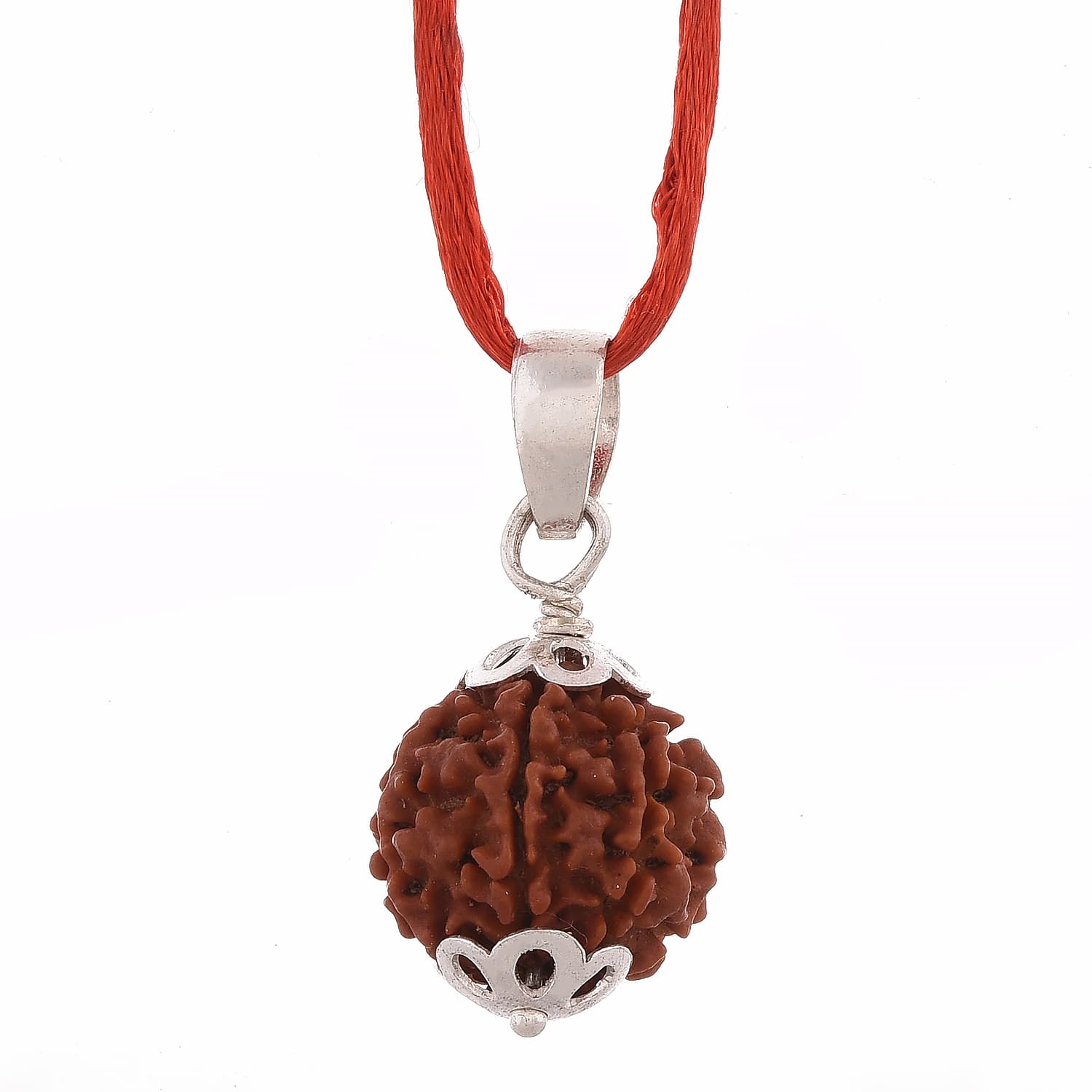
The 6 mukhi rudraksha is one of the most storied beads in the Shaiva tradition, ruled by the divine warrior Kartikeya and long worn on the recommendation of astrologers and pandits seeking balance and clarity for the wearer.
Amorfos · 5 min read
Within the quiet grammar of rudraksha — where each line etched on the seed's surface carries a name, a deity, a planet — the six-faced bead occupies a place of particular grace. The 6 mukhi rudraksha is neither the rarest nor the most commonly discussed, yet among those who wear rudraksha with intention and guidance, it is consistently recommended, consistently sought. To understand why, one must begin not with commerce but with meaning.
The Six Lines and What They Represent
A rudraksha's 'mukhi' refers to the naturally occurring clefts or faces that run longitudinally across the seed of the Elaeocarpus ganitrus tree. Each mukhi corresponds to a specific deity and, within Jyotish tradition, to a specific planetary force. The 6 mukhi rudraksha carries six such lines — six divisions, six faces — each a thread in a larger cosmological weave. This is not symbolism invented for modern consumption; it is a framework that appears in classical texts including the Shiva Purana and the Padma Purana, which detail the virtues and associations of each mukhi at length.
Ruling Deity: Kartikeya, the Commander of the Divine Army
The presiding deity of the 6 mukhi rudraksha is Kartikeya — also known as Skanda, Murugan, Subramanya, and Shanmukha, that last name itself meaning 'one of six faces'. Son of Shiva and Parvati, Kartikeya is the commander of the celestial army, the embodiment of valor, discipline, and wisdom earned through purpose. His iconography — the peacock mount, the vel or spear, the eternal youth — speaks to a quality of directed energy rather than brute force. Across Tamil Nadu, Kerala, and much of South India, his temples remain among the most actively worshipped, and the association between the six-faced bead and the six-faced god has never required explanation — it has simply always been known.
Shanmukha — the six-faced one. That the 6 mukhi rudraksha bears six lines is, within the tradition, no coincidence at all.
Planetary Associations: Venus, Mars, and the Question of Tradition
Here the tradition holds two streams, both worthy of acknowledgment. In many classical and contemporary Jyotish sources, the 6 mukhi rudraksha is associated with Venus (Shukra) — the planet governing refinement, creative intelligence, relationships, and the material arts. Shukra in Vedic astrology is the teacher of the asuras, a figure of immense learning and subtle power. In this reading, the six-faced bead is worn to harmonise Venusian energies in the chart.
A second, equally respected stream associates the 6 mukhi with Mars (Mangal) — the planet of courage, physical vitality, and decisive action, qualities that mirror Kartikeya's own martial nature. Some astrologers and pandits recommend the six-faced bead specifically for those navigating difficult Mars placements. Neither association is incorrect; they represent different but overlapping scholarly traditions, and a knowledgeable astrologer will weigh both before making a recommendation.
Who Traditionally Wears the 6 Mukhi Rudraksha
Across India, rudraksha are not typically self-prescribed. The practice, as it has come down through generations, is to approach an astrologer, a Shiva temple pandit, or a learned guru, who will study the wearer's birth chart and temperament before suggesting a specific mukhi or combination of beads. The 6 mukhi rudraksha, traditionally worn on the recommendation of astrologers and pandits, tends to be suggested for those whose charts show an imbalance or affliction in Venus or Mars, or for those who seek the qualities associated with Kartikeya — clarity of purpose, the courage to act, and the discipline to sustain effort over time.
- Individuals advised by their astrologer or pandit to balance Venus (Shukra) in their Jyotish chart
- Those recommended the bead for Mars (Mangal) harmonisation, particularly where Mars is placed in challenging positions
- Students of spiritual practice who have received guidance to wear a six-faced bead as part of a broader sadhana
- Devotees of Kartikeya or Murugan who wish to keep the energy of their ishta devata close
- Those seeking a bead associated with focused will, creative expression, and grounded confidence — on the advice of a qualified guide
Origin and Geography: Nepal vs. Indonesia
The Elaeocarpus ganitrus tree, from whose dried fruit all rudraksha are sourced, grows across a broad arc of terrain — the Himalayan foothills of Nepal and India, parts of Indonesia, and scattered locations in Sri Lanka and Myanmar. Among collectors and practitioners, Nepal-origin rudraksha are widely regarded as the premium standard: the beads are typically larger, with deeper and more distinct mukhis, and the Elaeocarpus trees of the Nepalese hills are considered to produce seeds of exceptional quality. Smaller, smoother beads originating from Java and Sumatra in Indonesia are also authentic and widely used, particularly in malas and multi-bead arrangements where a uniform size is desired. At Amorfos, our 6 mukhi rudraksha beads are individually sourced and Lab Certified, so you may wear them with full confidence in their authenticity.
On Wearing and Care
The tradition of wearing rudraksha is accompanied by its own gentle protocols, varying by lineage and region but sharing a common spirit of reverence. Many practitioners choose to have a bead energised or consecrated by a pandit before wearing it for the first time. The bead is typically worn closest to the skin — in a pendant at the throat or heart, or on the wrist — so that its texture is felt rather than merely displayed. Rudraksha should be kept away from chemical perfumes and cleaned periodically with plain water, then very lightly oiled with sesame or sandalwood oil to preserve the wood's natural lustre. When not worn, it rests well in a clean cloth or a small wooden box. These are not arbitrary rules; they are the accumulated wisdom of a practice that is, at its core, relational — between the wearer, the bead, and the tradition it carries.
The 6 mukhi rudraksha, then, is not a product in the ordinary sense. It is a small, striated seed that has made its way from a hillside tree to the neck of someone seeking something difficult to name — focus, perhaps, or courage, or simply the feeling of being in alignment with a force larger than one's daily concerns. That it has been doing so for centuries, across cultures and languages and generations, is recommendation enough.
Good to know
- Which deity rules the 6 mukhi rudraksha?
- The 6 mukhi rudraksha is traditionally associated with Kartikeya — also known as Skanda, Murugan, Subramanya, and Shanmukha — the six-faced son of Shiva and Parvati, and commander of the divine army.
- Which planet is associated with the 6 mukhi rudraksha in Jyotish tradition?
- Classical Jyotish texts associate the 6 mukhi rudraksha with Venus (Shukra) in many traditions, while others link it to Mars (Mangal), reflecting Kartikeya's martial nature. Both associations are respected; an astrologer or pandit will advise based on your individual birth chart.
- How do I know if the 6 mukhi rudraksha Amorfos sells is genuine?
- Every 6 mukhi rudraksha at Amorfos is Lab Certified for authenticity before it reaches you. We also offer a 7-day return window on unused, sealed products, and free shipping on orders above ₹999.
Rudraksha is traditionally worn on the recommendation of astrologers and pandits. We make no medical or miraculous claims. Every Amorfos bead is Lab Certified for authenticity and origin.