Mukhi guides
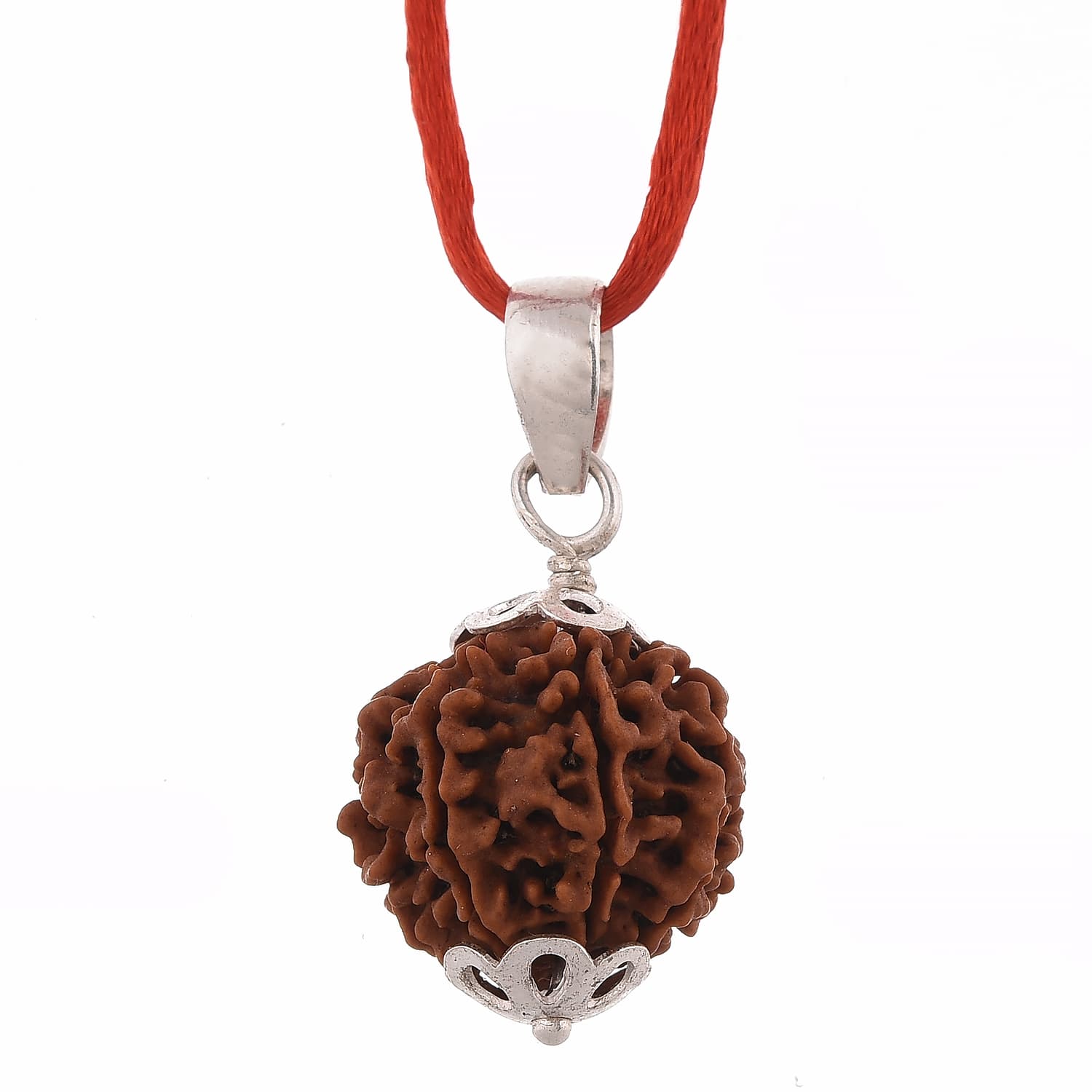
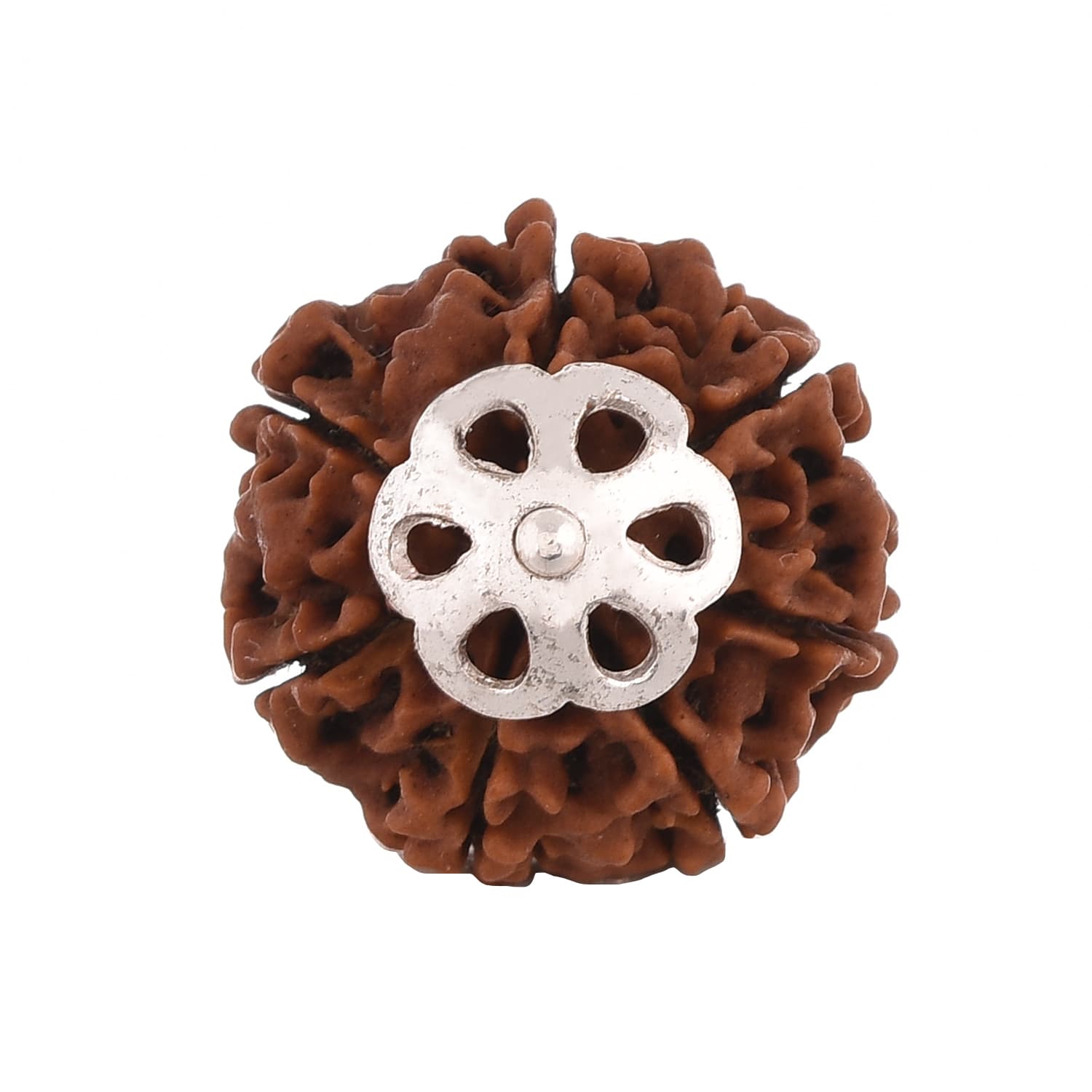
7 Mukhi Rudraksha: The Bead of Mahalakshmi
Strung at the intersection of devotion and discernment, the 7 mukhi rudraksha carries the grace of Mahalakshmi and the steadying influence of Saturn — a bead long worn on the counsel of astrologers and pandits seeking abundance and discipline in equal measure.
Amorfos · 5 min read
In the quiet taxonomy of rudraksha, each bead holds its own character — a particular weight, a particular energy, a particular story drawn from centuries of Shaiva and Shakta tradition. The 7 mukhi rudraksha is among the most quietly revered. It is neither the most dramatic nor the rarest, yet those who understand it return to it again and again. Its seven faces, or mukhis, are said to represent the seven rivers, the seven sages, and — most significantly in popular tradition — Mahalakshmi herself.
The Ruling Deity: Mahalakshmi
The presiding deity of the 7 mukhi rudraksha is Mahalakshmi, the goddess of abundance, prosperity, and auspiciousness. Unlike the immediate, petitionary form of wealth-seeking, Mahalakshmi represents a more enduring relationship with abundance — one rooted in virtue, patience, and right action. This distinction matters when understanding why pandits and astrologers recommend this bead not merely for material gain, but for cultivating the conditions in which prosperity becomes sustainable. The bead is traditionally associated with Ananta, one of the names of Mahalakshmi, and is sometimes referenced in classical texts alongside the seven Matrikas, the seven sages (Saptarishis), and the seven divine rivers.
Abundance, in the Lakshmi tradition, is not seized — it is invited. The 7 mukhi is a bead for those willing to create the conditions for grace to arrive.
The Ruling Planet: Saturn
In Jyotish — the classical Indian system of astrology — the 7 mukhi rudraksha is governed by Saturn, or Shani. This may seem counterintuitive at first. Saturn is the planet of karma, restriction, delay, and discipline; Mahalakshmi is the deity of flourishing. But the pairing reveals a deeper logic. True prosperity, the tradition holds, is not accidental — it is earned through patience, hard work, and the ability to endure difficulty without losing one's bearing. Saturn teaches precisely this. Astrologers who recommend the 7 mukhi often do so for those navigating a challenging Saturn period — a Sade Sati, a Shani Dasha, or a prominent Saturn placement in the natal chart — as a support during prolonged times of karmic reckoning.
Traditional Associations and Symbolism
The number seven carries extraordinary resonance across Indian cosmology and ritual. The seven mukhis of this bead are said to represent the seven seas (Saptasamudra), the seven sacred rivers (Sapta Sindhu), the seven sages (Saptarishi), and the seven horses of Surya's chariot. In Shaiva texts, the seven faces are also linked to Kartikeya and his seven manifestations, though the Mahalakshmi and Saturn associations remain the most widely observed in contemporary practice.
- Ruling deity: Mahalakshmi
- Ruling planet: Saturn (Shani)
- Associated with the Saptarishis (seven sages) and Sapta Sindhu (seven rivers)
- Traditionally linked to the cultivation of patience, discipline, and sustained abundance
- Worn on the recommendation of astrologers and pandits, particularly during Saturn-dominant periods
Who Wears the 7 Mukhi Rudraksha?
The 7 mukhi rudraksha is traditionally worn on the recommendation of astrologers and pandits. Those who are advised to wear it often share certain circumstances in common: a difficult Saturn placement, recurring obstacles in financial or professional matters, or a sense that effort is not yielding the results it deserves. It is also recommended to those who are beginning a new venture and wish to invite Mahalakshmi's favour before taking the first step. In household practice, some pandits suggest keeping a 7 mukhi bead in a place of worship or in the area where one conducts business, rather than — or in addition to — wearing it on the body.
It is worth stating clearly what this bead is not: it is not a remedy that bypasses effort, nor should it be approached as one. The tradition surrounding rudraksha has always been grounded in the understanding that these beads support and align — they do not substitute for right action, sincerity, or the ordinary disciplines of a well-lived life.
Origin and Sourcing
The finest 7 mukhi rudraksha beads are sourced from Nepal, where the high-altitude growing conditions of the Himalayan foothills produce beads with deep, well-defined mukhis and a naturally dense structure. Indonesian rudraksha — typically from Java — also yields 7 mukhi beads, generally smaller in size and with a smoother texture. Both origins are considered authentic in traditional practice. At Amorfos, every 7 mukhi rudraksha is Lab Certified, ensuring that the mukhi count is accurately identified and the bead is genuine Elaeocarpus ganitrus — the botanical species from which all true rudraksha are derived.
On Wearing and Care
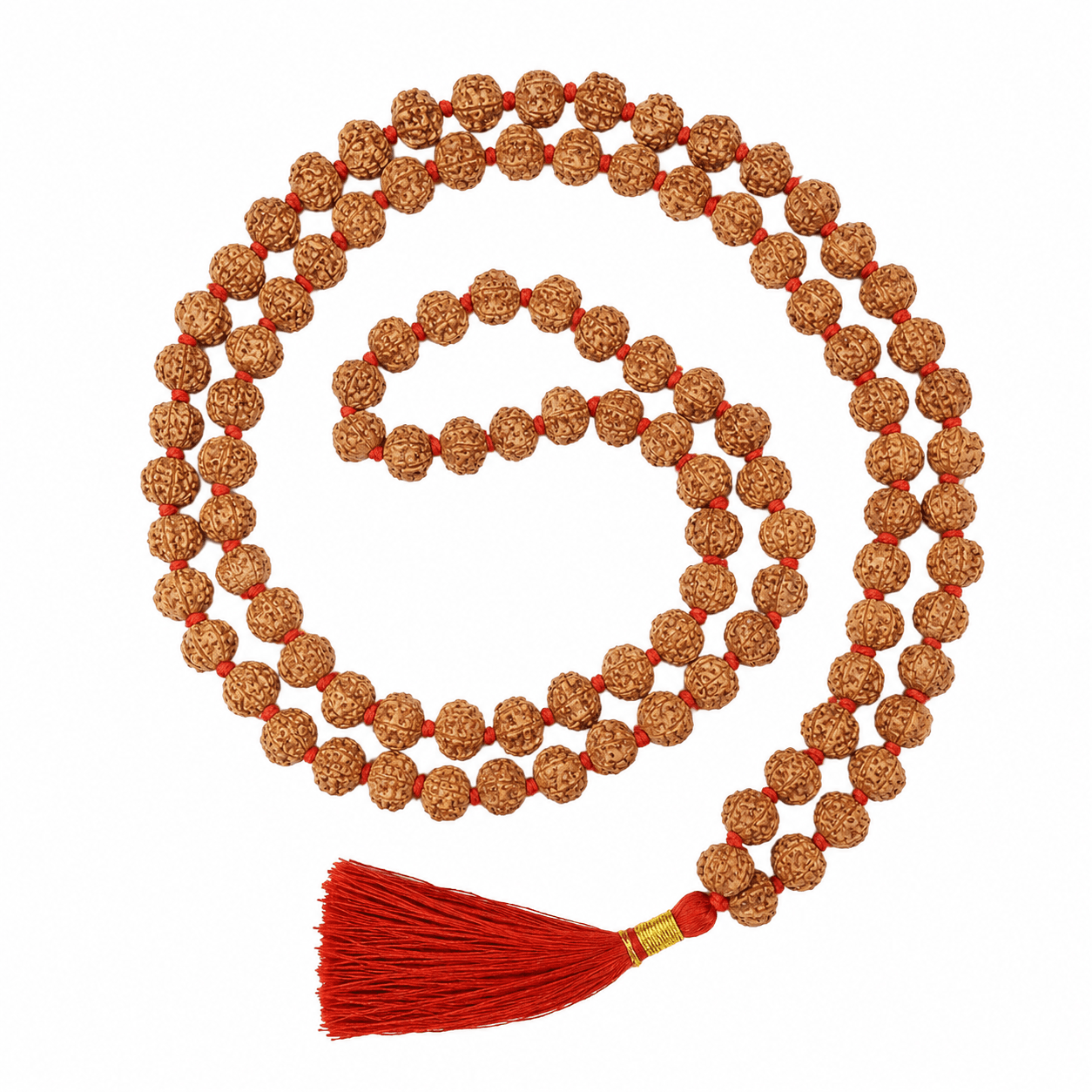
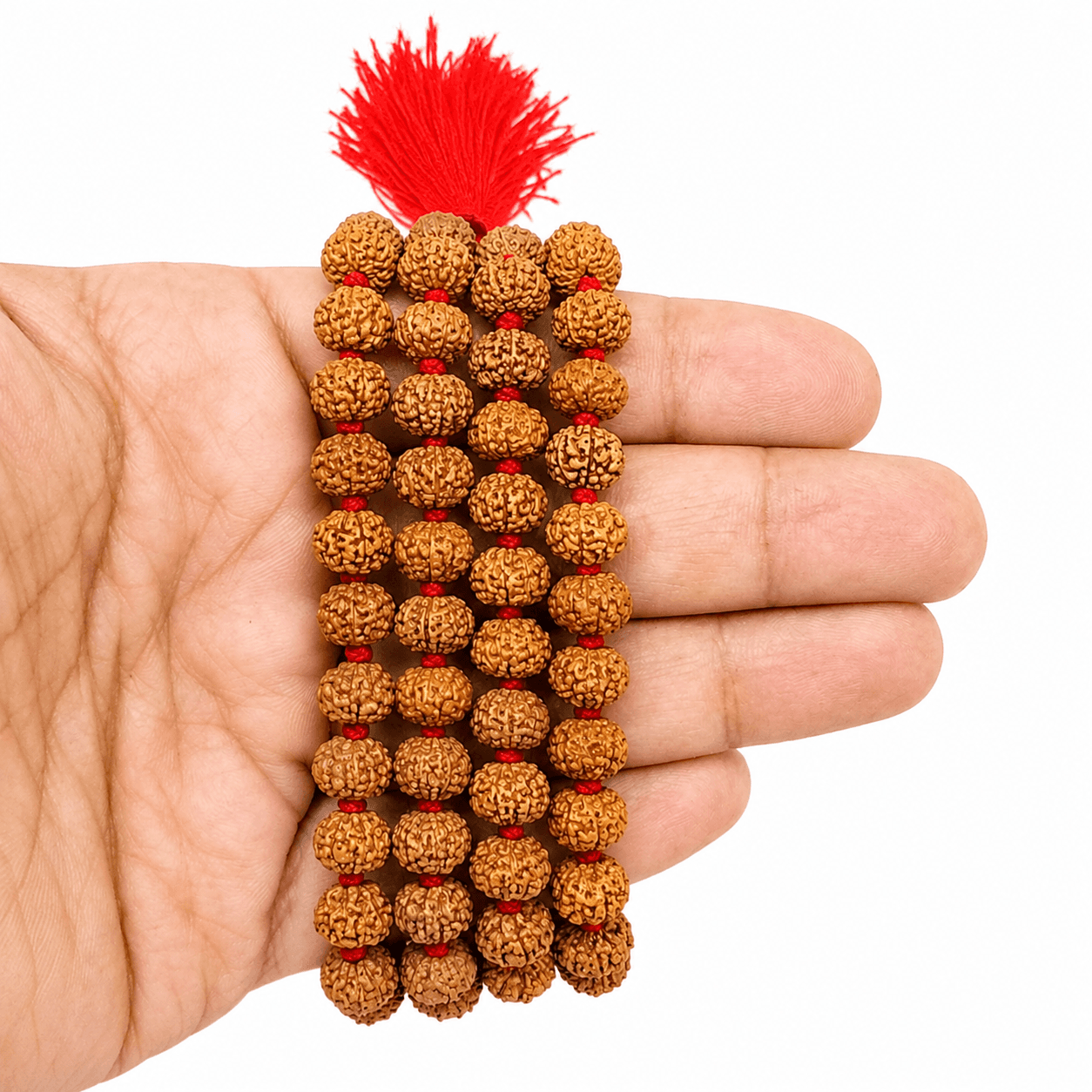
Pandits traditionally recommend energising a rudraksha before it is first worn — a process involving a simple Panchabhisheka (ritual bathing with milk, honey, ghee, curd, and water) followed by the chanting of the appropriate mantra. For the 7 mukhi, the mantra most commonly associated with it is Om Hum Namah. Once worn, rudraksha beads benefit from being kept away from synthetic chemicals, excessive moisture, and environments of ritual impurity. A light application of sandalwood oil every few weeks helps maintain the bead's natural lustre and longevity.
A Note on Authenticity
The rudraksha market in India is, unfortunately, not free from adulteration. Artificially carved faces, painted seeds, and misidentified species are not uncommon in unregulated retail. This is the reason Lab Certification matters — not as a luxury, but as a basic assurance. Every bead in the Amorfos collection has been assessed and certified before it reaches you. The certificate travels with the bead, so you know precisely what you hold.
Good to know
- What is the ruling deity and planet of the 7 mukhi rudraksha?
- The 7 mukhi rudraksha is traditionally governed by Mahalakshmi as its ruling deity and Saturn (Shani) as its ruling planet in Jyotish astrology. This combination reflects the classical understanding that enduring abundance is cultivated through patience, discipline, and sincere effort — qualities associated with both Mahalakshmi's grace and Saturn's karmic lessons.
- Who should wear a 7 mukhi rudraksha?
- The 7 mukhi rudraksha is traditionally worn on the recommendation of astrologers and pandits. It is most often suggested for those experiencing a difficult Saturn period — such as Sade Sati or Shani Dasha — or those seeking Mahalakshmi's favour during a new professional or financial undertaking. We always encourage consulting a knowledgeable astrologer or pandit before adopting any rudraksha into your daily practice.
- How do I know the 7 mukhi rudraksha from Amorfos is genuine?
- Every 7 mukhi rudraksha in our collection is Lab Certified, confirming both the authentic botanical species (Elaeocarpus ganitrus) and the accurate mukhi count. The certification accompanies your bead at the time of purchase. We source from established origins in Nepal and, where noted, Indonesia — and do not stock uncertified inventory.
Rudraksha is traditionally worn on the recommendation of astrologers and pandits. We make no medical or miraculous claims. Every Amorfos bead is Lab Certified for authenticity and origin.